The signal came back. So did she.
The signal arrives at 2:47 on a Tuesday morning. Nobody senior is awake to hear it.
Autumn 1996. Forty miles east of Albuquerque, a satellite that has been dead since 1991 starts transmitting. What it transmits isn't telemetry. It's a memory. The face in the memory is hers.
Static opens the trilogy in autumn 1996 and the story runs to the end of the analog century.
I chose 1996 because it is the last moment the story works. Dial-up, CRT screens, logs kept on paper, a tape you could hold. If you found something you could not explain, you could not search for it, and you could not send it to anyone who would answer before morning. You sat with it. By 2000 that isolation is gone.
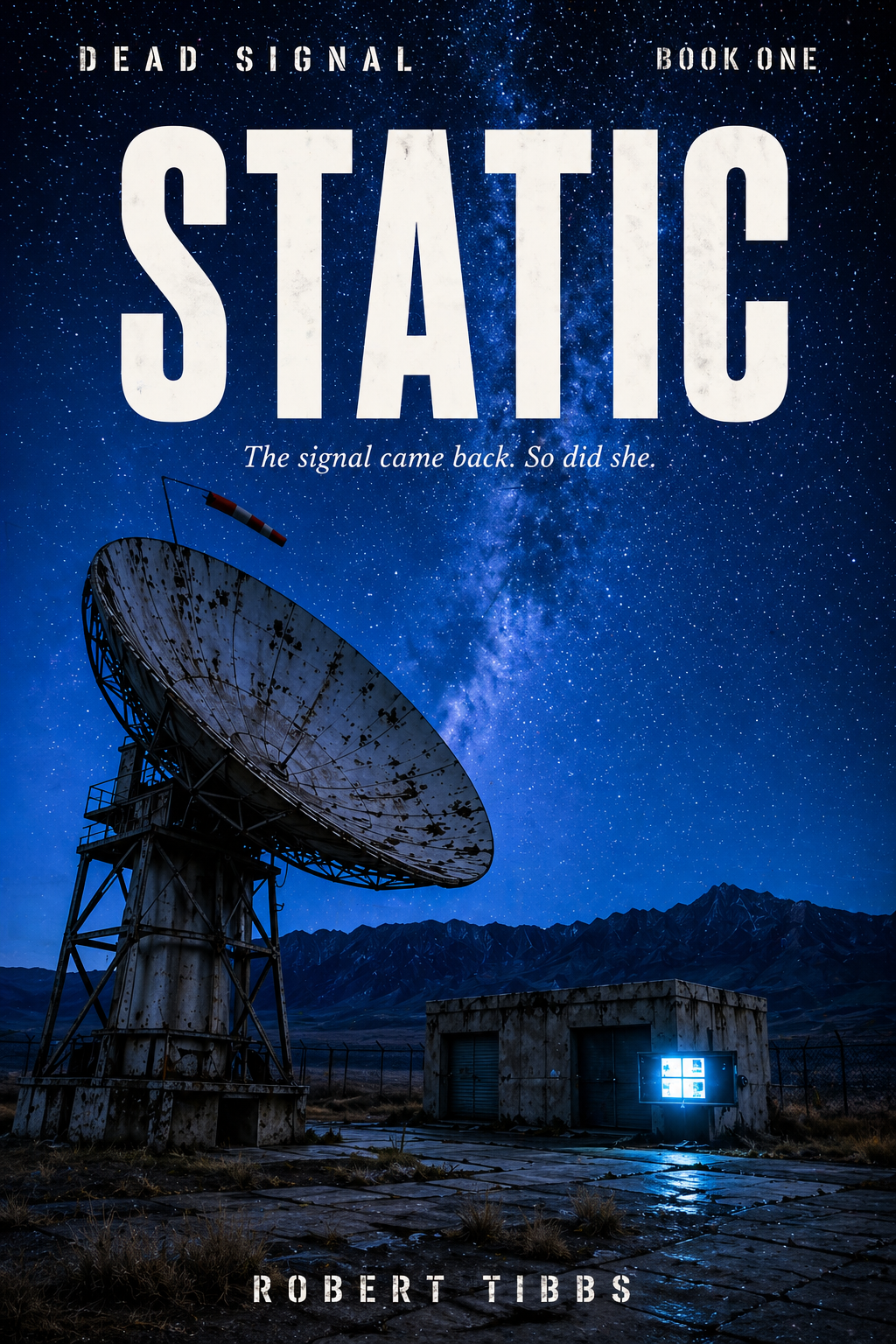
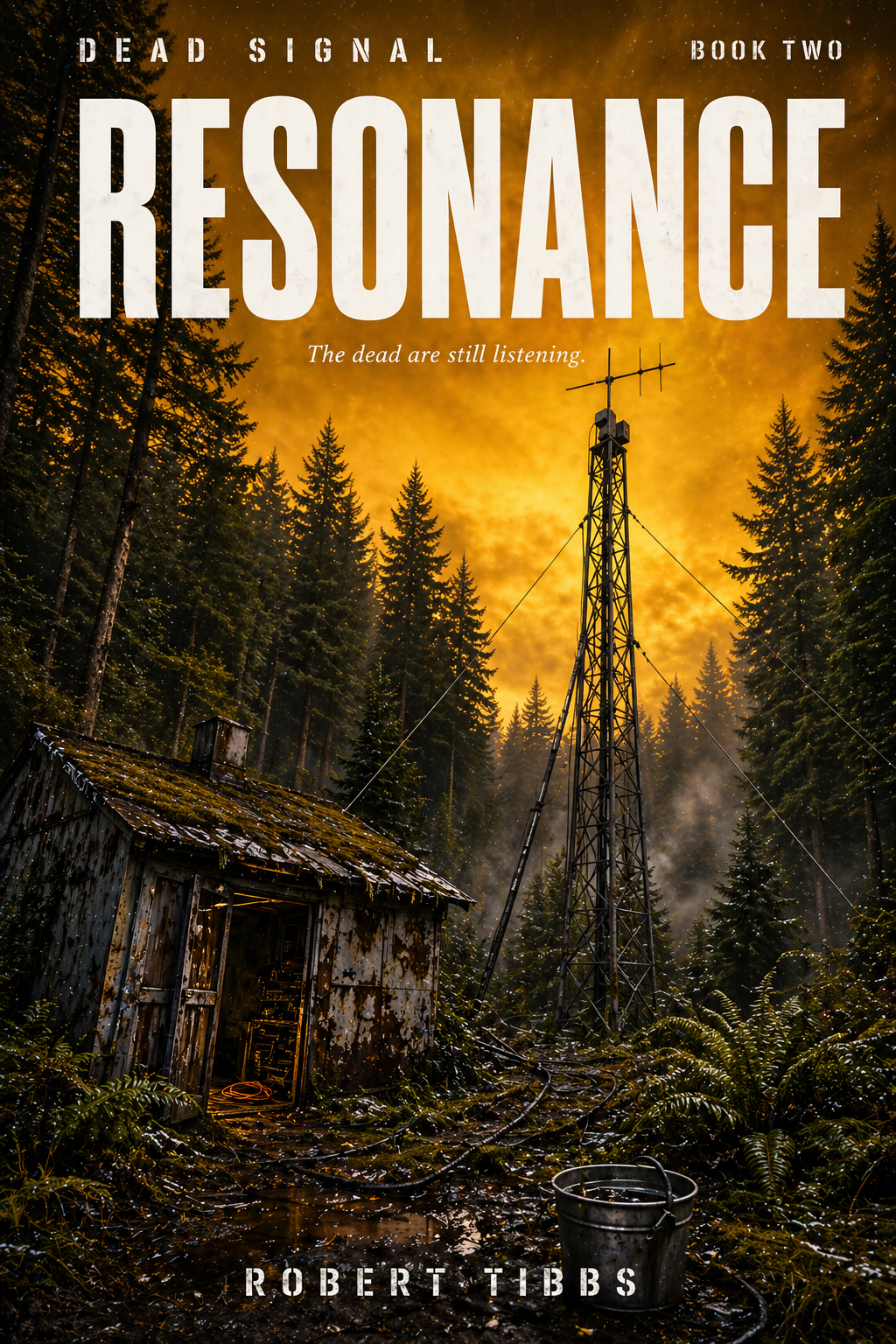
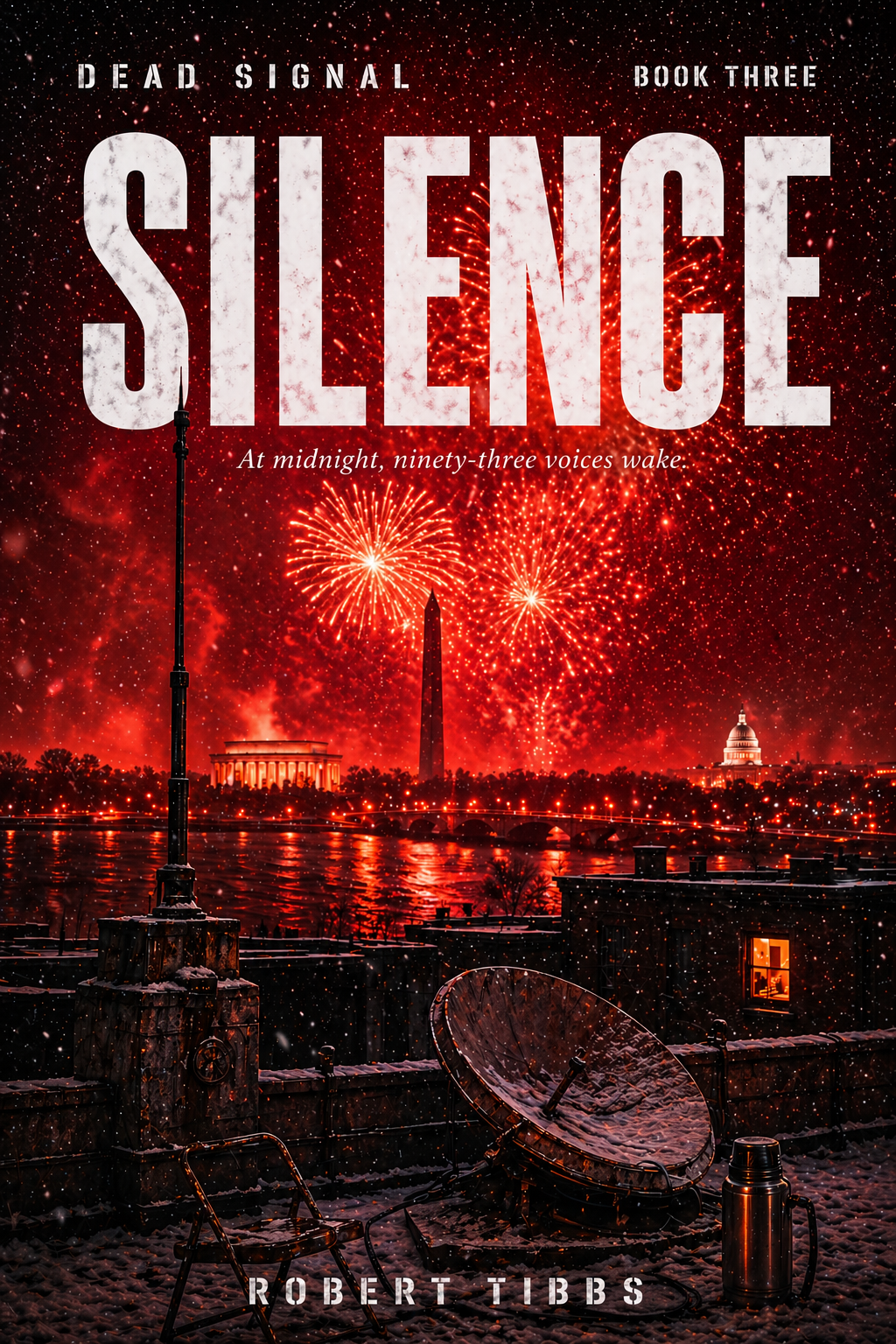
The signal came back. So did she.
The signal arrives at 2:47 on a Tuesday morning. Nobody senior is awake to hear it.
The dead are still listening.
Two years on, the traffic has not stopped. What began as one dead bird over the high desert is now a pattern with a shape, and the people who built the network are still answering to it.
At midnight, ninety-three voices wake.
The last year of the analog century. Every question the trilogy has asked about what the signals carried, and who kept listening, comes due before the decade closes.
Advance reader, BookSirens
Book one · Publishes September 6 2026
A satellite is only ever a set of numbers. Catalog entry, launch date, orbit, status. ECHO-7 has all four: 02135, 1974, high and slow, decommissioned 1991. Nothing about the record leaves room for what happens at 2:47 on a Tuesday morning in autumn 1996.
It transmits. Forty miles east of Albuquerque, inside a low concrete building Meridian Communications keeps for exactly this kind of routine, the carrier comes up at 1427.6 MHz and stays up. Sam Hadley has the graveyard shift, eleven until the sun clears the Sandias, and she is the only person awake to hear it.
What it transmits isn't telemetry. It's a memory. The face in the memory is hers.
Everything after that is a question about evidence. A dead object with a live frequency is either a mistake in the paperwork or something that was never switched off. Sam, twenty-one and alone on shift, has until morning to decide which one she is willing to report, and to whom.
Twenty-six years inside large federal technology programs, around the kinds of systems that are built to keep secrets. Eventually I decided to write about one that talked back.
The work taught me how these programs behave. Not the org chart, but the quiet parts: what gets logged and what gets left out, who is on shift when something unusual happens, and how long a finding sits before anyone senior hears it. That gap between the anomaly and the escalation is where I have spent most of my career, and it is where this story lives.
Sam Hadley is twenty-one and works nights at a monitoring station in 1996. She is not a veteran, an agent, or an expert. She is the one who is there when it happens, which is usually who it is.
Robert Tibbs
Trilogy updates, period research, and the occasional transmission. No spoilers.